
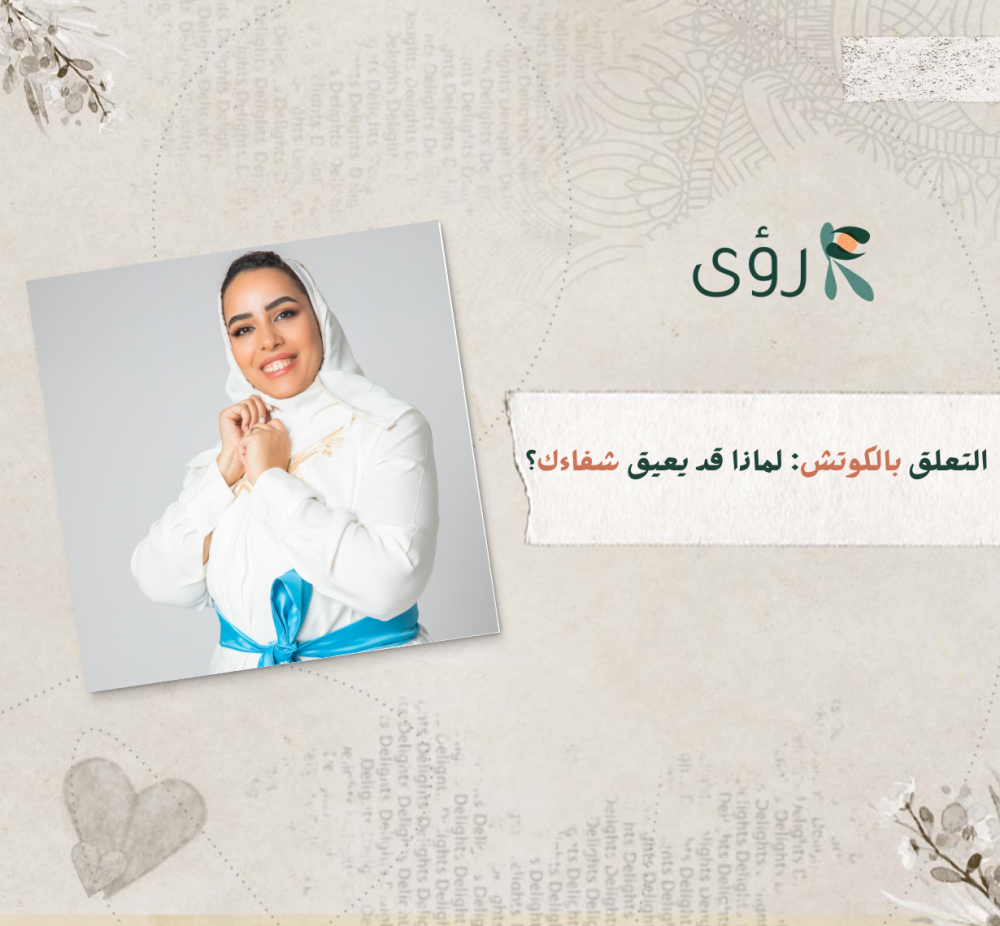
On our journey toward healing and personal growth, we often seek someone to lead, guide, and support us. This person is the coach, the mentor who sets us on the right path toward balance and awareness.
However, there is a hidden obstacle that some people do not notice, which could change all the results: attachment to the coach.
Some might think it's a good thing, representing love and respect, but it's actually a feeling of excessive dependence on someone else, a kind of codependency. It drains your energy and determination, and you surrender your autonomy to them. This type of attachment can keep you trapped in your own challenges because they serve your attachment.
Summary: A healthy relationship = true balance
The right relationship with the coach
The ideal relationship is based on:
- Trust, not attachment
- Trust means knowing that the coach has experience and effective tools, but he is not your source of inner strength.
- Attachment means that you rely on him emotionally to determine your mood, your decisions, or your sense of self-worth.
- Empowerment instead of tyranny
- A true coach provides you with the tools and motivates you to use your inner strength, not to become a substitute for your mind or feelings.
- personal space
- Healing and growth happen when you deal with your own emotions, and a coach is simply a guide to help you find the path, not to carry the burden of emotions for you.
The difference between trust and attachment: a real-life example
Imagine Sarah, a student in the Quiet Power program :
- She relied on the coach to know every step, to evaluate every feeling, even her simplest daily decisions.
- She felt temporarily safe, but she noticed that any absence of the coach made her confused and nervous.
Conversely, when I began to build trust :
- She continued with coaching sessions to learn emotional control techniques.
- She began using emotional intelligence exercises on her daily feelings
- I noticed greater independence, inner clarity, and satisfaction with my personal progress.
The difference is clear: trust empowers, attachment restricts .
Why does attachment hinder healing?
Being overly attached to the coach leads to several problems:
- Postponing emotional independence
The person continues to seek approval or guidance for every step, instead of confronting their feelings on their own.
- Frustration during temporary separation
Any absence of the coach causes anxiety or a feeling of being lost.
- Concealing the true results
Personal growth requires experiencing pain, failure, and self-learning. Attachment prevents facing these experiences freely.
- Negative dependence on others
Instead of developing internal tools, the coach turns to a “quick fix,” creating an unsustainable cycle.
Practical solutions to avoid attachment and build trust
1) Defining the boundaries of the relationship
- Set session times and contact information for the coach.
- Find out exactly what the coach's role is, and what your role is.
2) Practicing daily independence
- Use the tools you learned in the sessions independently.
- Record your progress and observations before sharing with the coach.
3) Developing self-awareness
- Distinguish between feeling dependent and confident
- Observe your reactions when facing challenges without the support of a coach.
4) Integrate learning into your professional life
- Incorporate gentle strength training into your daily life
- Focus on using emotional intelligence to manage stress, relationships, and decision-making.
The coach's role is that of an enabler, not a replacement.
A successful coach, like Roaa Baazeem , doesn't carry your feelings for you, nor does he make decisions for you, but rather:
- It provides a scientific and accurate assessment of your strengths and opportunities in emotional intelligence.
- It guides you with genuine human experience and gives you practical tools to apply it.
- He accompanies you step by step, but the responsibility for change and success lies with you. It is not in his hand , but in yours.
In this way, the coach becomes a bridge to reach the stronger version of you, not a burden on your personal growth.
Real success stories
Many who participated in the programs Quiet power Note:
- A deeper sense of independence and control over their lives
- The ability to make calm and balanced decisions
- Overcoming cycles of anxiety or excessive emotionality
- A feeling of psychological empowerment, instead of depending on others.
These results are not hypothetical, but tangible results that are repeated with everyone who builds a healthy relationship with the coach .
In short: A healthy relationship = true healing
- Trust empowers
- Attachment restricts
- The coach is not a replacement for you, but an assistant on your journey towards deeper awareness.
- Real results appear when you use the tools, experiment, and take responsibility for your growth.
Your journey towards healing and balance begins With a step and genuine awareness , not by relying on someone else to guide every feeling or decision.
Start your journey now
Benefit from the experience of quiet power with Ru’a Ba’azeem , to learn the tools of emotional intelligence, build your independence, and achieve a sustainable inner balance.
📞 For inquiries and reservations: +966 536 515 121